

AI Overview on Google: What an Analysis of 2.37 Million Keywords Reveals
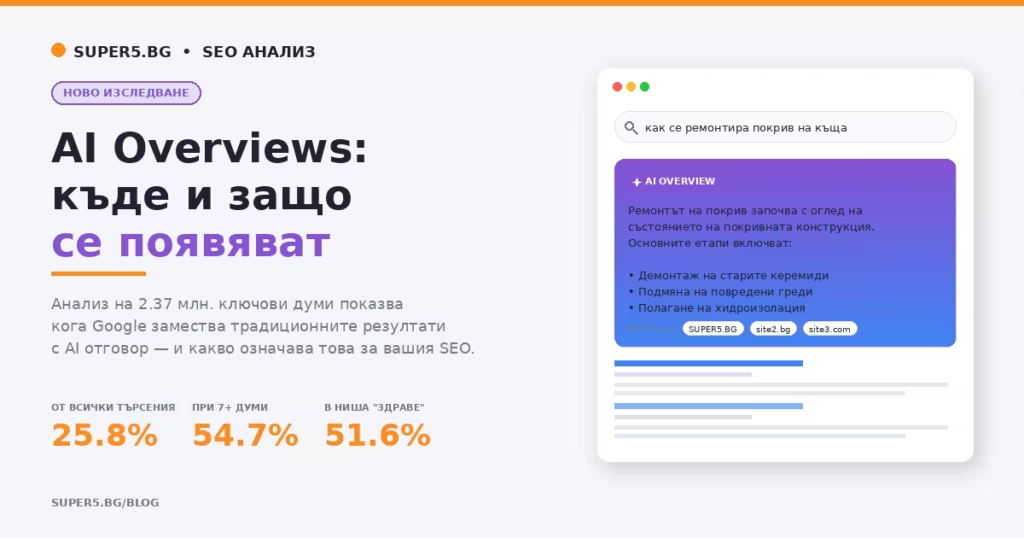
AI Overview — the AI-generated answer that Google displays above the organic results — is now available in 25.8% of all searches. This scale is no coincidence: its emergence follows strict patterns that every SEO specialist and website owner must understand in order to protect their traffic in 2026.
In this article, we examine data from a large-scale study of 2,371,151 keywords and explain what they mean for businesses in Bulgaria—especially for companies that rely on organic traffic from informational content.
Quick Answer: The Most Important Things in 30 Seconds
- AI Overview appears in 1 out of every 4 searches (25.8%) on Google US.
- For orders with 7+ words the percentage jumps above 54.7%, and for informational ones—to 65.9%.
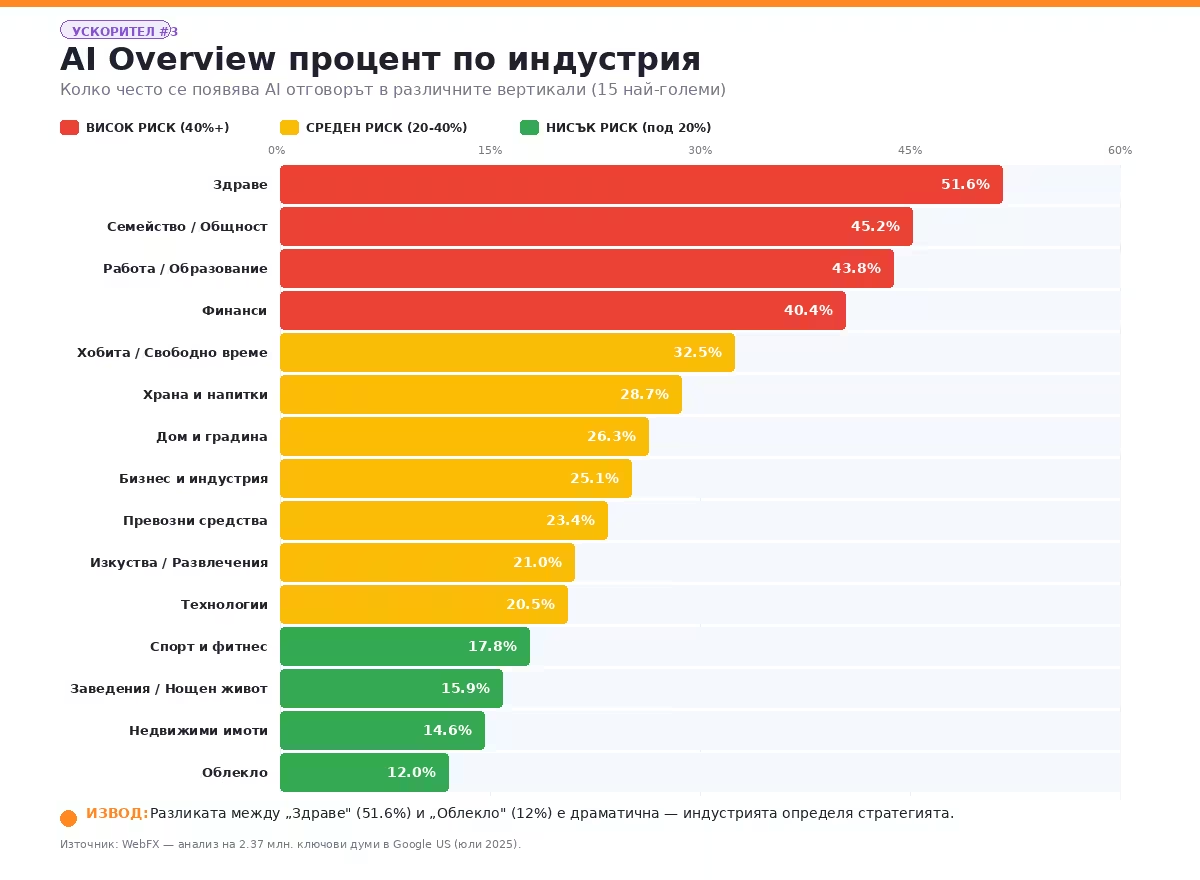
- Health (51.6%), finance (40.4%) and education (43.8%) are the industries most affected.
- Local („to me“) and branded Modifiers lower the percentage to 6.4%.
- The Defense: Strong E-E-A-T signals, schema markup, local SEO, interactive content.
What is AI Overview?
AI Overview is an AI-generated response that Google displays at the top of the results for certain searches. Instead of the traditional layout of 10 blue links, the user sees a synthesized answer compiled from multiple sources, with a list of the cited websites at the bottom.
For the user, this is convenient—the answer comes instantly, without the need to click. For businesses that rely on organic traffic, this is a serious threat: a large portion of searches end without a single website visit because the AI block has already provided enough information.
Current status: "AI Overview" in one of four searches
25.8% sounds manageable. The reality is that this percentage represents millions of daily searches, where traditional organic results are no longer the first thing the user sees. For businesses that invest in content (articles, guides, explanatory videos) to build authority and drive traffic to the top of the funnel, this is a tectonic shift.
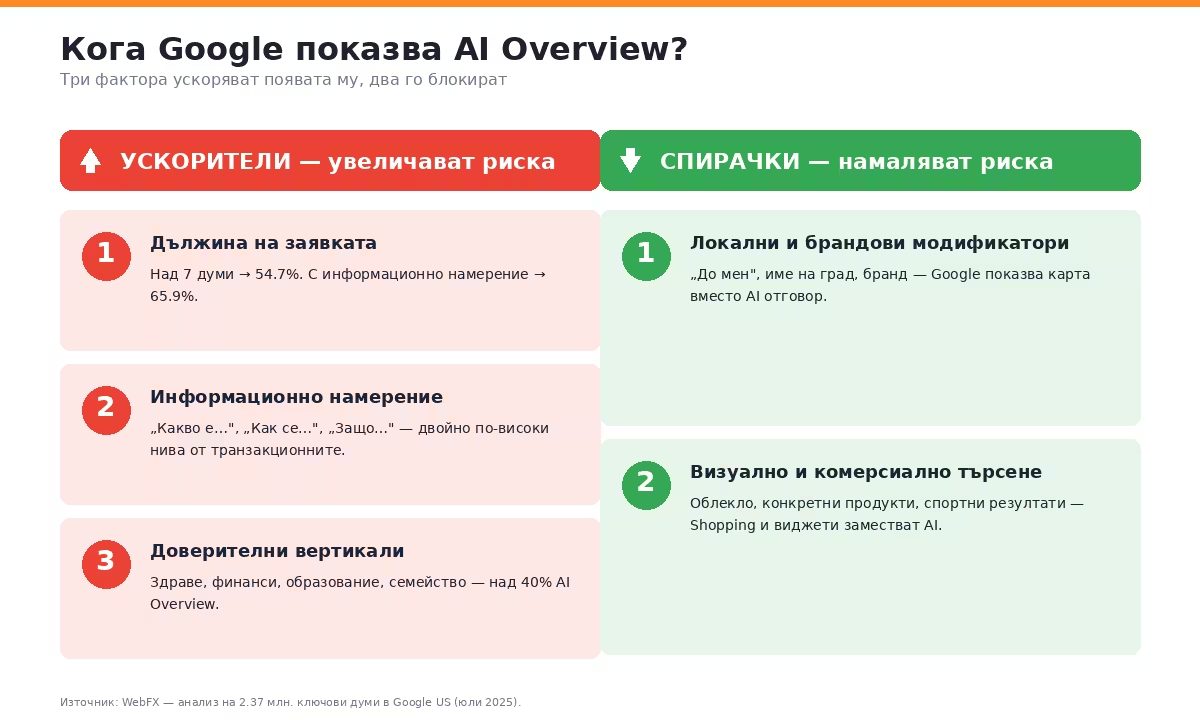
The good news: the launch of AI Overview is no coincidence. It follows three clearly distinct the accelerator and two brakes — factors that either increase or drastically decrease the likelihood that Google will generate an AI response for a given query.
The Three Drivers of AI: An Overview
Accelerator 1: The length of the request creates a „risk zone“
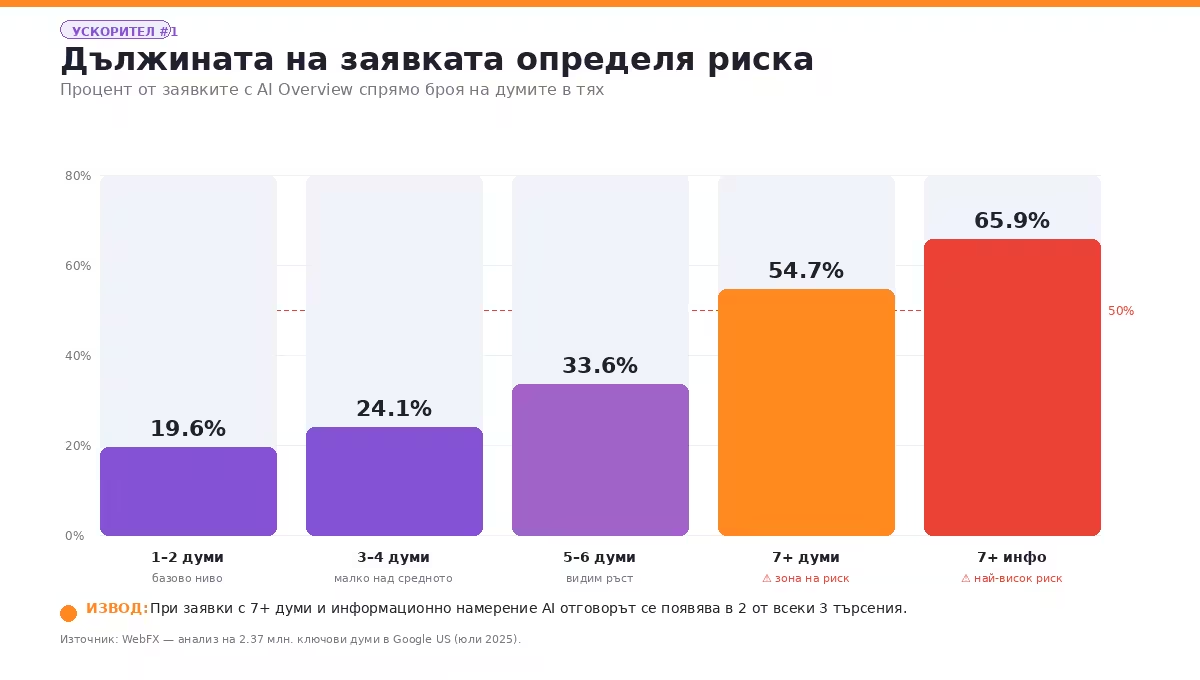
The relationship between the number of words in the query and the probability of an AI Overview is one of the strongest correlations in the data.
| Length of the request | AI Overview Percentage | Features |
|---|---|---|
| 1–2 words | 19.6% | Basic level (medical terms such as „eczema“ — over 50%) |
| 3–4 words | 24.1% | Slightly above average |
| 5–6 words | 33.6% | Visible growth — typical „how-to“ requests |
| 7+ words | 54.7% | More than half—a high-risk area |
| 7+ words + informational intent | 65.9% | About 2 out of every 3 searches |
There is a clear turning point— Once the phrase reaches seven words, the game changes. This is particularly problematic for content marketing because longer search queries typically represent more specific and valuable searches—precisely the ones that, until recently, drove the most qualified traffic.
Compare the two requests:
- „roof repair“ (3 words, ~24% AI Overview)
- „How to replace a broken roof tile without a professional“ (10 words, probably 65%+)
Accelerator 2: The intent to obtain information is the most vulnerable
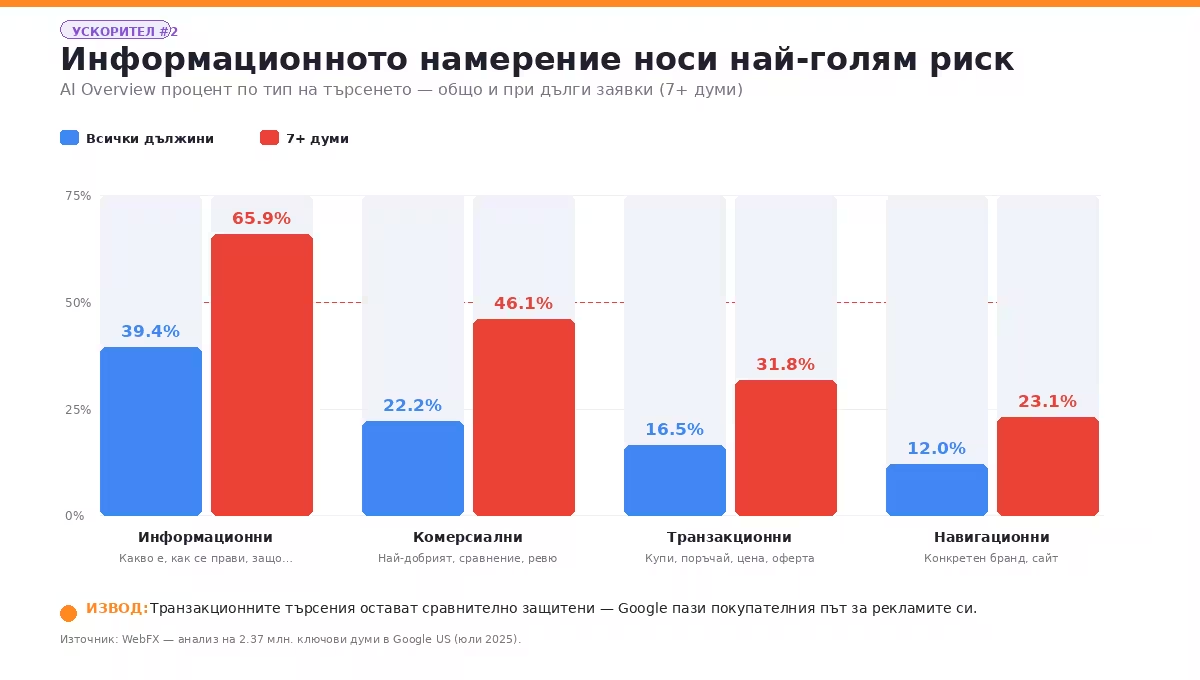
The intent behind the search—what the user actually wants—is the second key factor behind the emergence of AI Overview.
| Search Type | AI Overview (all lengths) | AI Overview (7+ words) |
|---|---|---|
| Information | 39.4% | 65.9% |
| Commercial | 22.2% | 46.1% |
| Transactional | 16.5% | 31.8% |
| Navigation | 12.0% | 23.1% |
Accelerator 3: The industrial sector determines the level of risk
The Two Obstacles to AI Overview
Obstacle 1: Local and Brand Modifiers
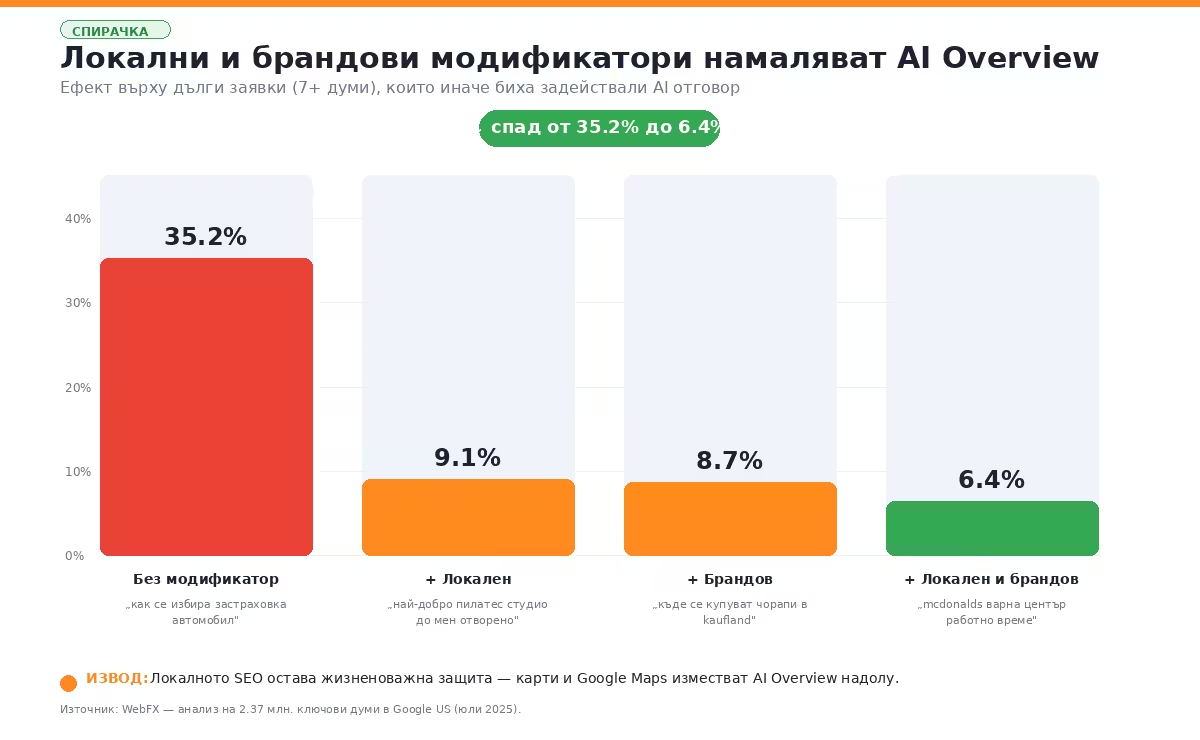
| Modifier Type | Example | AI Overview Percentage |
|---|---|---|
| No modifier | „How to Choose Car Insurance“ | 35.2% |
| Local | „The best Pilates studio near me that's open“ | 9.1% |
| Brandov | „Where can I buy socks at Kaufland?“ | 8.7% |
| Local and Branded | „McDonald's Varna Center Hours“ | 6.4% |
Obstacle 2: Visual and Commercial Search
| Request Type | Example | Industry | AI Overview |
|---|---|---|---|
| Long Product Requests | „Women's long-sleeved ribbed dress“ | Clothing | <10% |
| Local Services | „Plumber near me, open now“ | Services | 8% |
| Brand Navigation | „econt shipment tracking“ | Logistics | 6% |
| Local Brands | „Pizza Hut near me“ | Restaurants | 3% |
Quick summary: accelerators vs. brakes
What Does the AI Overview Mean for Your SEO Strategy?
This change requires a reevaluation of key assumptions. Here’s what we recommend to our clients at Super5.bg—especially those in high-risk industries:
1. Audit of the Most Vulnerable Keywords
Start by taking stock: Which pages on your site rank for 7+ word informational queries in trusted verticals? These pages are at the greatest risk of a traffic drop. Track their rankings and traffic in Google Search Console—and don’t be surprised if impressions remain steady while clicks decline. This is the classic sign of AI Overview, which is eating up clicks.
2. Strengthening E-E-A-T signals
Google has high standards for the sources it cites in the AI Overview. Generic, impersonal content is not highlighted. Expertise, Experience, Authority, and Trustworthiness (E-E-A-T) are the new low:
– Sign your articles with the name of an actual author who has relevant qualifications
– Include a resume listing specific certifications, experience, and publications
– For medical content — a review by a doctor or pharmacist
– For financial content — a certified public accountant or financial consultant
– Cite primary sources (research, official documents), not blogs
The goal is to become the source, **from which the AI quotes**, rather than becoming the victim that AI replaces.
3. Schema Markup: Beyond the Basics
Google and AI systems are increasingly relying on structured data to understand the nature of content. FAQ and HowTo schemas are just the beginning—but there are specialized types that are worth implementing:
– `MedicalWebPage` for health-related content
– `FinancialProduct` for financial services
– `EducationalOrganization` and `Course` for educational materials
– `Service` with complete details about services
The more machine-readable your content is, the more likely AI systems are to recognize and cite it.
4. Hybrid Content Formats
One way to survive in the AI era is to do things that AI can't summarize. An article about the symptoms of a particular health issue can be replaced in seconds — **Interactive Symptom Checker** It is not possible. Similarly:
– Video tutorials showing the processes
– Calculators and self-assessment tools
– Comparison tables with filters
– Webinars and podcasts featuring experts
– Personal Assessments and Tests
At Super5.bg, we are increasingly recommending that clients set aside a significant portion of their budget for interactive elements, not just static text.
5. Localization: Your Natural Protection
If you have physical locations or services in specific towns or cities, **Local SEO Is Your Strongest Defense Against AI Overview**. Queries with a local modifier trigger the AI Overview in about 9% of cases—a fourfold decrease compared to total queries.
Specifically for the Bulgarian market, this means:
– A complete and optimized Google Business Profile with up-to-date photos, business hours, and services
– Local mentions (zelenipages.bg, doctor.bg, etc., depending on the niche)
– Website pages for each location with unique content (no duplicates!)
– Regular reviews from real customers written in natural language
6. Paid advertising for critical information keywords
It's not a favorite option among content marketers, but for high-intent keywords with significant traffic that are now being absorbed by AI Overview, **A paid channel can offset the organic decline**. The cost per click for informational queries in Google Ads is usually significantly lower than that for commercial queries—you can often acquire the traffic you’re losing at a reasonable price.
What Does "AI Overview" Mean for SEO as a Marketing Channel?
The appearance of AI Overview in a quarter of searches signals a fundamental shift in how users interact with Google. As conversational searches—typical of Generation Z—become more common, the percentage of AI Overview results will only increase.
Here are a few trends we're seeing take shape:
From „traffic capture“ to „building authority”t — Success is increasingly measured by whether you are cited as a source, rather than by traffic alone
From Keyword Optimization to Topic Coverage — Individual pages are less important than whether you cover the entire topic thoroughly
From Creating New Content to Organizing Existing Content — Schema, internal linking, structuring content clusters
From SERP rankings to citations in AI Overview and in LLMs such as ChatGPT, Perplexity, and Claude — a new battle for visibility
The businesses that will succeed are those that **have a deep understanding of user intent** and provide value that AI cannot summarize in three paragraphs. This represents a higher standard for content than was sufficient in 2020–2024.
But that's not the end of SEO—it's the next chapter.
Frequently Asked Questions (FAQ)
What is AI Overview on Google?
AI Overview is an AI-generated response that Google displays above organic results for certain searches. It synthesizes information from multiple sources and often provides the user with a direct answer without the need to click on a result.
How often is the AI Overview published?
According to an analysis of 2.37 million keywords, “AI Overview” appears in 25.8% of all Google US searches. For queries with 7 or more words, the share jumps to over 50%, and in the healthcare sector, it reaches 51.6%.
Which industries are most affected by AI Overview?
The areas most severely affected are health (51.6%), family and community (45.2%), work and education (43.8%), and finances (40.4%). The least affected sectors are clothing (12%), real estate (14.6%), and restaurants (15.9%).
How Can We Protect Our Website from AI Overview?
The main strategies are: strengthening E-E-A-T signals (expertise, experience, authority, trust), implementing schema markup, focusing on local and brand-related keywords, and creating interactive content (calculators, videos, tools) that AI cannot summarize.
Does "AI Overview" appear on the Bulgarian version of Google?
Yes, AI Overview is expanding rapidly on Google in Bulgaria in 2026. The actual percentages in Bulgaria still lag behind those in the U.S., but the trends are the same—especially in the areas of health, finance, and education.
Does AI Overview Reduce SEO Traffic?
Yes, especially when it comes to informational content. The classic „cannibalization“ pattern identified by AI Overview is a rise in impressions accompanied by a simultaneous drop in clicks in Google Search Console. We recommend monitoring the top informational pages on a monthly basis.
Which requests are protected by AI Overview?
Queries with local modifiers („near me,“ city name), brand names, product SKU descriptions, real-time sports scores, and navigation searches are the most protected. The AI Overview percentage for these rarely exceeds 10%.
Do you need help with your SEO strategy in the AI era?
В Super5.bg We conduct SEO audits that assess the AI Overview risk for each keyword in your portfolio, and we develop strategies specifically tailored to the new reality of search in 2026. Contact us for a free initial consultation